PFS Signal Conditioners/Pulse Amplifiers
PFS signal conditioners and pulse amplifiers help connect turbine flowmeters with monitoring, control, and totalizing equipment. They amplify, condition, convert, or scale incoming frequency signals for reliable system integration.
Westech Industrial offers the PA714 Pulse Amplifier, FIC712-2 4–20 mA Transmitter, and PT420 Frequency Converter across Canada. Together, these products support pulse, current, and voltage-based measurement systems.
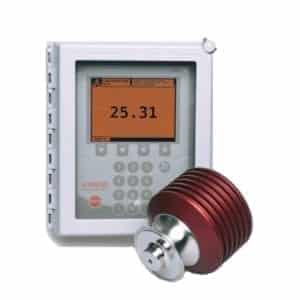
The PA714 conditions low-amplitude pickup signals and produces a clean square-wave pulse output. The FIC712-2 converts frequency into a proportional 4–20 mA signal. Meanwhile, the PT420 provides rate, totalization, linearization, and multiple output options.
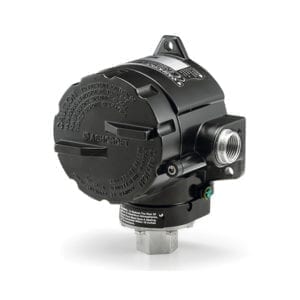
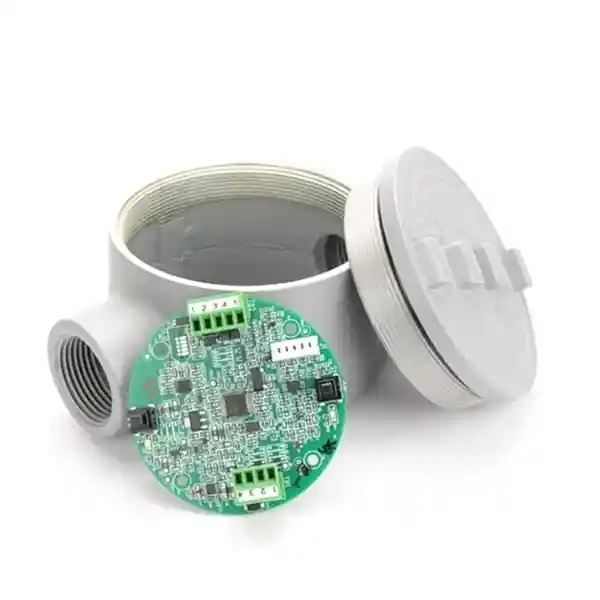
The broader PFS range also includes 0–5 V, 0–10 V, and 4–20 mA signal conditioners. Selected configurations fit compact Y-3 explosion-proof enclosures. Field-selectable inputs and outputs help accommodate magnetic and digital pickup technologies.
Westech can assist with product selection, integration, technical support, and system upgrades. Our Custom Fabrication team can also incorporate signal conditioning into control panels, metering assemblies, and complete instrumentation packages.
Available: Canada Wide
Quantity
PRODUCT FEATURES
REQUEST FOR INFORMATION
Description
Three Signal-Conditioning Options
The PFS signal conditioner range provides three distinct solutions for turbine flowmeter signals. Each model addresses a different integration requirement.
Choose the PA714 when the receiving device requires a strong pulse input. Select the FIC712-2 when the system requires a proportional 4–20 mA signal. Use the PT420 when the application needs programming, linearization, totalization, or several outputs.
This selection helps facilities connect flowmeters with PLCs, displays, counters, recorders, and other process instrumentation.
PA714 Pulse Amplifier for Low-Level Signals
The PA714 mounts directly on the flowmeter and conditions low-amplitude signals from magnetic pickup coils. It accepts sine or square-wave inputs from 0 to 10 kHz.
The amplifier converts the incoming signal into a square-wave output. Its output amplitude follows the PA714 supply voltage. Therefore, downstream equipment receives a clean pulse signal for counting, monitoring, or flow calculations.
Field-adjustable sensitivity helps the PA714 separate valid flow pulses from electrical noise. Direct flowmeter mounting also reduces the distance travelled by the low-level pickup signal. These features support dependable operation in electrically noisy environments.
Separate LEDs indicate power and output activity. In addition, a built-in oscillator injects a 4 Hz test signal when the test button is pressed. This function simplifies commissioning and troubleshooting.
FIC712-2 Frequency-to-4–20 mA Conversion
The FIC712-2 converts a frequency input into a linear 4–20 mA current output. When paired with a turbine flowmeter, the output represents the measured flow rate.
The transmitter produces 4 mA at zero frequency. It produces 20 mA at the selected full-scale frequency. Users can select a full-scale range between 100 Hz and 10 kHz.
A field-adjustable sensitivity control helps distinguish valid inputs from background noise. The FIC712-2 supports differential input or single-ended input operation. ZERO and SPAN controls support calibration for the required measurement range.
The FIC712-2 operates as a true two-wire transmitter. The same two wires carry input power and the output signal. Current transmission also provides strong noise immunity for longer cable runs.
Built-in testing and individual power and signal LEDs support setup and diagnostics. The transmitter also mounts directly on the flowmeter.
PT420 Programmable Frequency Converter
The PT420 combines signal conditioning with rate measurement and totalization. It accepts sine-wave signals from passive pickups and square-wave signals from active pickups.
Users can monitor and program the PT420 through an RS-232 connection. An RS-232-to-USB cable supports connection with many computers. The terminal interface provides access to flow ranges, K-factors, linearization, outputs, and operating status.
The PT420 can calculate flow from turbine frequency and a programmed K-factor. It monitors rate in pulses per second or gallons per minute. It also maintains batch and grand totals. Operators can reset the batch total, while the grand total remains non-resettable.
A two-to-20-point linearizer compensates for variations in the turbine meter’s K-factor. The converter interpolates between programmed calibration points. This capability can improve performance across the calibrated flow range.
Users can also set minimum and maximum flow limits with onboard switches. LED indicators guide the field-setting process. EEPROM storage retains parameters when power is removed. A secondary location stores backup parameters and the linearizer table.
Multiple PT420 Outputs
The PT420 supports several concurrent outputs. Available outputs include a 4–20 mA current loop, factored pulse, and 0–5 V or 0–10 V signal.
Users can scale the current and voltage outputs to the selected flow range. They can also generate these outputs from turbine frequency or calculated flow.
The factored pulse output can represent input pulses or calculated volume. Selectable and custom pulse dividers help match the output to external counters and totalizers. Users can also configure fixed or variable pulse widths.
Built-in current and voltage testing supports commissioning. Short-circuit protection helps protect the pulse and voltage outputs.
Flexible Input and Output Configurations
The broader PFS line includes pulse amplifiers and frequency converters with 0–5 V, 0–10 V, and 4–20 mA outputs. Selected models accept magnetic or digital pickup technologies.
Compatible pickup types may include standard magnetic, digital magnetic, RF, Hall-effect, zero-speed, and smart sensors. However, input compatibility depends on the selected model and configuration.
ZERO and SPAN adjustments allow users to match selected converters to the required measurement range. Minimal interaction between these adjustments helps streamline calibration.
Enclosures for Industrial Environments
The PA714 and FIC712-2 use FM-approved and CSA-certified enclosures for designated Class I and Class II groups.
The PT420 uses a copper-free cast-aluminum enclosure with an epoxy powder coating. It carries NEMA 3, 4, and 4X enclosure ratings. Its specifications include Class I, Class II, and Zone classifications for designated groups.
Always confirm the required enclosure, electrical classification, and certification before ordering. Approvals can vary by product version and configuration.
Applications
PFS signal conditioners and pulse amplifiers support turbine flow measurement systems across many industrial applications. They help connect field-mounted sensors with local or remote monitoring equipment.
- Turbine flowmeter signal amplification
- Frequency-to-4–20 mA conversion
- Flow rate monitoring
- Batch and grand totalization
- Remote flow signal transmission
- PLC and control system integration
- Pulse counter and totalizer inputs
- 0–5 V and 0–10 V flow indication
- Meter-mounted signal conditioning
- Liquid flow measurement
- Gas flow measurement
- Noisy industrial environments
- Hazardous-location flowmeter installations
- Metering panels and custom instrumentation packages
Documents

Manufacturer info
Primary Flow Signal designs and manufactures flow measurement solutions for liquid, gas, and steam applications. Its product offering includes Venturi flow meters, wedge-type meters, orifice flow elements, flow nozzles, and custom-engineered differential pressure measurement products for industries such as water and wastewater, oil and gas, power generation, industrial processing, automotive, and cryogenic service.