Jacoby-Tarbox Safety Glass and Shields (Clark Reliance)
Jacoby-Tarbox sight flow indicators and sight windows can use several glass and window configurations to meet different process safety, temperature and viewing requirements. Available options include standard borosilicate glass, Phenomenal UniGlas®, quartz, specialty glass and Full-View Dual Window configurations.
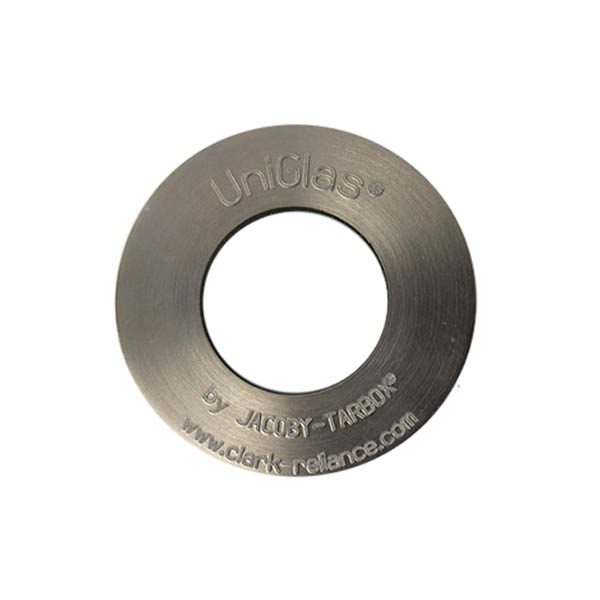
UniGlas combines glass and metal into one fused disc. Its metal outer ring absorbs installation forces that would otherwise act directly on the glass. This construction provides a 10:1 safety factor and improves resistance to pressure, impact and thermal stress.
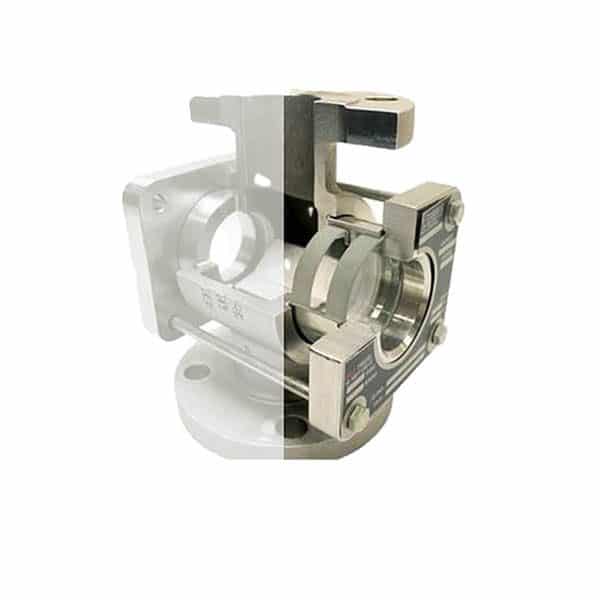
For applications requiring added redundancy, Jacoby-Tarbox can configure compatible flat-glass bodies with Full-View Dual Windows. This arrangement uses two independently mounted discs at each opening. If the process-side disc becomes damaged, the outer disc provides temporary backup pressure containment.
Dual-window configurations can use borosilicate glass, UniGlas or quartz. Projects requiring an FM-approved assembly must specify the applicable dual-window configuration.
Westech Industrial can help select the appropriate Jacoby-Tarbox body and window option based on pressure, temperature, process media and approval requirements. Our service and Custom Fabrication capabilities can also support installation and integration into larger process systems. These solutions are available Canada-wide through Westech Industrial.
Quantity
PRODUCT FEATURES
REQUEST FOR INFORMATION
Description
Jacoby-Tarbox Safety Glass Options for Compatible Bodies
Jacoby-Tarbox safety glass options allow users to configure compatible sight flow indicators and sight windows for specific operating conditions.
Available materials include standard borosilicate glass, UniGlas, quartz and other specialty glass. Users can also specify single-window or Full-View Dual Window configurations.
The available option depends on the body style and window design. UniGlas suits compatible circular window openings. Full-View Dual Windows fit compatible flat-glass sight flow indicators and sight windows.
This flexible approach lets users increase process safety without selecting an entirely different product line. It also supports both new equipment and compatible retrofit installations.
Phenomenal UniGlas® Fusion Integration
UniGlas combines glass with a machined metal outer ring. During manufacturing, the glass flows into the ring and creates one integrated disc.
The ring can use carbon steel, stainless steel or Hastelloy C alloys. The selected glass and metal have compatible thermal expansion characteristics. Therefore, both materials respond together during temperature and pressure changes.
The metal ring also absorbs much of the force created during installation. This design prevents retaining bolts from applying concentrated pressure directly to the glass edges.
As a result, UniGlas resists chipping, scratching, surface pitting and installation-related stress. The design also provides increased resistance to pressure, impact and thermal shock.
10:1 UniGlas Safety Factor
UniGlas uses a 10:1 design safety factor. The metal ring places the glass under controlled compressive force and creates a uniform stress pattern.
This construction helps the glass resist mechanical impact and pressure changes. It also improves structural integrity across the complete window surface.
The glass formula resists damage from acids, alkalis, steam wear and erosion. However, users must confirm compatibility with the actual process media and operating conditions.
Full-View Dual Window Redundancy
The Full-View Dual Window configuration places two window discs at each opening. An air space separates the inner and outer discs.
Each disc has independent mounting. Therefore, damage to one disc does not transfer directly to the second window.
If the inner disc fails, the outer disc can temporarily maintain system pressure. Operators must then remove the unit from service and replace the damaged window.
The dual configuration adds redundancy without requiring a separate sight flow indicator body. Dual windows are available in borosilicate glass, UniGlas or quartz.
FM-Approved Dual Window Configurations
Projects requiring an FM-approved assembly must specify the applicable Full-View Dual Window configuration.
An FM-approved dual-window sight flow indicator contains four window discs. Each viewing opening contains one inner disc and one outer disc.
This arrangement provides full redundancy at both sides of the indicator. It also increases protection against thermal shock, corrosion, erosion and external mechanical forces.
Protection Against Common Sight Glass Failure Causes
Jacoby-Tarbox Full-View Dual Windows address five major causes of sight glass failure.
The metal cartridge and internal shims distribute bolting forces across the assembly. This design reduces concentrated stress on the glass.
The air space between the windows limits the temperature change across each disc. The outer window also protects the inner glass from sudden external temperature changes.
If corrosion or erosion weakens the process-side disc, the outer window remains isolated from the media. It can continue retaining pressure until operators safely shut down the system.
Separating the windows also limits the transfer of external mechanical forces. Therefore, impact against one window does not directly affect the second disc.
Reusable UniGlas Disc Design
Technicians may reinstall a UniGlas disc after maintenance when inspection finds no visible damage. Jacoby-Tarbox identifies UniGlas as its reusable glass-to-metal optical disc option.
The fused disc does not rely on glass bonding agents, shims, packing or adjustment screws. However, the complete assembly still uses the required sealing and cushion gaskets.
Qualified personnel must inspect all components before reinstallation. They must also follow the supplied torque and tightening instructions.
Smooth Surface for Clear Process Viewing
Finish lapping creates a smooth surface across the UniGlas fusion line. The design removes exposed glass edges that could chip or collect foreign material.
UniGlas transmits light with minimal distortion. Operators can use the viewing opening to observe process movement, colour, volume, viscosity and mixing conditions.
Actual visibility depends on the selected body, glass thickness, process media and operating environment.
Quartz and Specialty Glass Options
Jacoby-Tarbox offers quartz and specialty glass for applications with unusual optical or temperature requirements.
Quartz can support specific wavelength transmission needs. It can also form part of a compatible dual-window configuration.
Westech can review the process temperature, pressure, media and viewing requirements before recommending a glass material.
Controlled UniGlas Batch Testing
Jacoby-Tarbox uses controlled manufacturing and testing procedures for UniGlas discs. Visual inspection confirms proper fusion between the glass and metal ring.
Selected samples undergo underwater dip-bubble testing at 100 psi. Samples also receive pressure testing at five times the admissible operating pressure.
Additional tests measure diameter, thickness, flatness, parallelism and surface roughness. Random quench tests evaluate resistance to sudden temperature changes.
These procedures help maintain consistent UniGlas performance between manufacturing batches.
Applications
Jacoby-Tarbox safety glass options support process viewing across demanding manufacturing and processing environments. The selected glass and configuration should match the body design, process media, pressure and temperature.
Industries commonly using these options include:
- Chemical processing and refining
- Pharmaceutical manufacturing
- Food and beverage processing
- Nuclear facilities
- Biological processing
- Mining and mineral processing
- Electrical industries
- General manufacturing and fabrication
Compatible installations can include:
- Tanks and pressure vessels
- Process pipelines
- Autoclaves
- Vacuum components
- Compressors
- Pumps
- Filters
- Sight flow indicators
- Vessel-mounted sight windows
UniGlas and dual-window configurations can support new equipment and compatible retrofit projects.
Documents

Manufacturer Info
Clark-Reliance® Corporation is a global leader in the level indication and control, sightflow indication, filtration and separation industries. The company’s well-known brands constitute the broadest line of level instrumentation for boilers and other equipment found in utilities, refineries, chemical processing and other industries.
Website: https://www.clarkreliance.com/