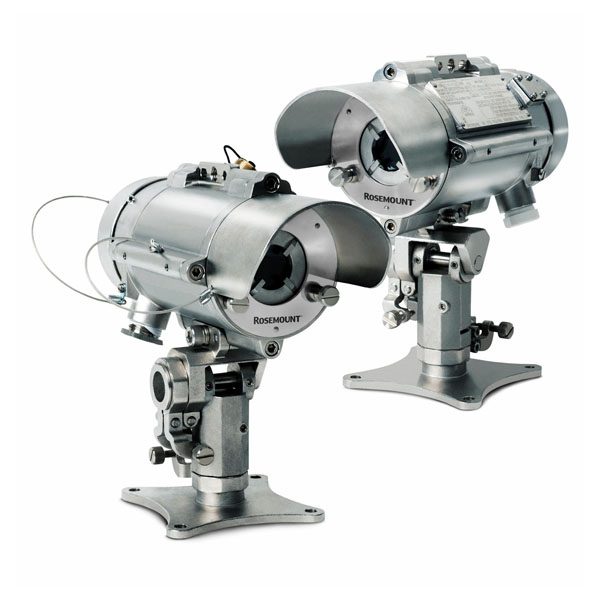
Rosemount™ 935 Open Path Combustible Gas Detector
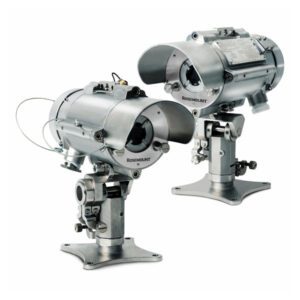
The Rosemount 935 Open Path Combustible Gas Detector is designed for continuous monitoring of combustible hydrocarbon gases across large areas where a point detector may not provide enough coverage. Using xenon flash infrared transmitter and receiver technology, the Rosemount 935 provides fast, reliable open path gas detection over distances up to 660 ft. (200 m), making it well suited for refineries, tank farms, compressor stations, loading areas, offshore platforms, LNG/LPG facilities, and other hazardous industrial environments.
Built for challenging field conditions, the Rosemount 935 is engineered to maintain reliable performance in environments affected by dust, fog, rain, snow, vibration, condensation, icing, solar radiation, hydrocarbon flames, and other external infrared sources. Its automatic gain control helps maintain accurate detection with up to 95 percent signal obscuration, while heated optics help reduce condensation and ice buildup on the optical window.
The detector provides a high-speed response in under two seconds, high false alarm immunity, continuous self-diagnostics, and an RTC event recorder that stores the last 375 events. The Rosemount 935 is also field configurable using HART® or RS-485 Modbus®, supporting easier commissioning, maintenance, and asset management.
Available at Westech Industrial in BC, AB, and SK, the Rosemount 935 can be supported by Westech’s experienced team. Westech can also assist with custom fabrication requirements, including detector mounting, panel integration, system design support, and gas detection solutions built for demanding Canadian industrial environments.
Quantity
PRODUCT FEATURES
REQUEST FOR INFORMATION
Description
Long-Range Open Path Gas Detection
The Rosemount 935 open path gas detector monitors combustible hydrocarbon gases across large industrial areas. Depending on the selected transmitter range, it supports installation distances from 23 to 660 ft (7 to 200 m), giving facilities flexible coverage options. As a result, operators can monitor wider zones with one transmitter and receiver pair.
Fast Response for Combustible Gas Hazards
The Rosemount 935 responds to combustible gas hazards in less than two seconds. This fast response helps facilities identify potential leaks quickly. Therefore, operators can take action before gas hazards continue to develop. This response time supports critical safety monitoring in high-risk process areas.
High False Alarm Immunity
Industrial environments often include sunlight, heat, flames, vibration, and other background conditions. However, the Rosemount 935 offers strong false alarm immunity. It is not influenced by solar radiation, hydrocarbon flames, or other external infrared radiation sources. As a result, facilities can reduce nuisance alarms and improve operator confidence.
Reliable Performance in Harsh Weather
The Rosemount 935 performs reliably in demanding outdoor and process environments. Heated optics help eliminate condensation and icing on the detector window. In addition, automatic gain control supports accurate detection during dust, fog, rain, snow, or heavy obscuration. The detector can continue operating with up to 95 percent signal obscuration.
Continuous Device Health Monitoring
Built-in self-test functionality continuously monitors device health. This feature helps operators identify potential faults before they affect performance. In turn, maintenance teams can respond faster and plan service more effectively. Continuous diagnostics also help improve confidence in the overall gas detection system.
Event Recording for Maintenance Review
The Rosemount 935 includes an RTC event recorder. It stores the last 375 events for maintenance and troubleshooting review. This information can help teams understand alarm history, fault activity, and operating conditions. As a result, facilities can support better maintenance decisions over time.
Field Configurable Communication Options
The detector supports field configuration through HART® or RS-485 Modbus®. These communication options help simplify commissioning, diagnostics, and ongoing maintenance. In addition, the RS-485 interface provides data communication to a PC or handheld unit. This flexibility helps facilities integrate the detector into broader control and safety systems.
Rugged Stainless Steel Construction
The source and detector housings use 316L stainless steel with an electro-polished finish. This rugged construction supports reliable operation in harsh industrial locations. Additionally, the circuit boards are conformal coated and protected from mechanical vibration. This design helps the detector withstand demanding site conditions.
Visual Status Indicators
The receiver includes front and back visual status indicators. Three-colour LEDs show power, fault, and alarm status. Green indicates power on, amber indicates fault, and red indicates alarm. Therefore, operators can quickly check detector status in the field.
Hazardous Area and Functional Safety Approvals
The Rosemount 935 includes approvals for demanding hazardous area applications. Approvals include ATEX, IECEx, FM/FMC, TR CU (EAC), INMETRO, and SIL-2 TÜV certification. These approvals support use in many industrial safety applications.
Applications
The Rosemount 935 Open Path Combustible Gas Detector is ideal for industrial facilities that need to monitor large hazardous areas for combustible hydrocarbon gas leaks. It is especially useful in applications where gas may disperse over open spaces, around process equipment, or between storage and loading areas.
Common applications include:
- Petrochemical, pharmaceutical, and chemical storage and production areas
- Flammable chemical storage sites and hazardous waste disposal areas
- Refineries, oil platforms, pipelines, refuelling stations, and fuel storage facilities
- Hazardous loading docks, transportation depots, and shipping warehouses
- Engine rooms and enclosed industrial equipment areas
- Compressor and pumping stations
- Test cells
- LNG and LPG systems
- Offshore FPSO facilities and fixed oil rigs
- Canadian oil and gas, energy, and industrial safety applications in BC, AB, and SK
Documents

Manufacturer info
Emerson has boldly transformed itself to create value for our customers and shareholders. With our newly energized focus on our two core business platforms — Automation Solutions and Commercial & Residential Solutions — we can confront the challenges of an increasingly complex and unpredictable marketplace from a position of strength. This allows us to drive both near- and long-term value. And retain our single-trusted-partner status with the process, industrial, commercial and residential industries.