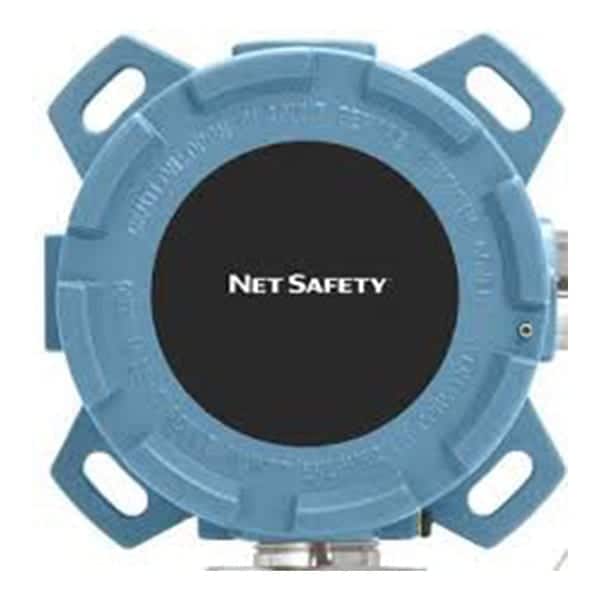
Net Safety™ Junction Box
The Net Safety Junction Box is a multi-purpose termination box designed for use with a wide range of Net Safety gas detection products. The JB Series can be used to support remote gas sensor mounting from compatible transmitters or as a termination box for detector wiring, helping create safe, organized, and reliable connections in industrial gas detection systems.
The JB-MPD-A configuration includes a digital output terminal board for gas sensors and APM applications, housed in an aluminum enclosure. This model is suitable for remote mounting compatible Net Safety gas sensors, including Millennium II ST3 toxic gas sensors, Millennium II SC3 combustible gas sensors, Millennium SIR100 infrared combustible sensors, Millennium SC1100 combustible sensors, Gas Shield sensors, and APM sensors.
Available through Westech Industrial in BC, Alberta, and Saskatchewan, the Net Safety Junction Box can be supplied as part of a broader gas detection solution. Westech Industrial can also support customers with fixed gas detection service capabilities and custom fabrication options, including the integration of junction boxes into panels, assemblies, and site-specific detection system layouts.
Quantity
PRODUCT FEATURES
REQUEST FOR INFORMATION
Description
Multi-Purpose Junction Box Design
The Net Safety Junction Box supports multiple Net Safety products and field configurations. As a result, it helps simplify gas detection wiring in industrial environments. Facilities can use it for remote sensor mounting or structured termination requirements. This flexibility makes it useful across many fixed gas detection system layouts.
Digital Output Configuration
The JB-MPD model supports digital output applications with compatible gas sensors and APM products. Therefore, it helps create organized field wiring between sensors, transmitters, and control systems. It also supports clean termination points, which can help improve system layout and service access. In addition, the terminal board helps technicians manage wiring consistently during installation.
Remote Sensor Mounting Support
The Net Safety Junction Box allows compatible gas sensors to be separated from transmitters. This can help when the sensor needs better exposure to a gas hazard. It can also help when the transmitter requires a more accessible location. The manual recommends a maximum separation distance of 2,000 ft. / 610 m with 16 AWG wire. However, the SC1100 combustible sensor should not exceed 150 ft. / 46 m. Therefore, installers should confirm sensor type and wiring requirements before final installation.
Aluminum Housing Option
The JB-MPD-A model includes an aluminum housing for industrial applications. This enclosure provides a durable option for gas detection termination needs. Additionally, the JB Series also lists a stainless steel housing option. This gives facilities another material choice for applications with different site requirements.
Hazardous Area Installation Support
The junction box carries North American hazardous area certifications. These include Class I, Division 1, Groups BCD T5 and Class I, Zone 1 ratings. As a result, the product supports use in classified industrial areas when installed correctly. Qualified personnel should always follow manufacturer instructions and applicable electrical codes.
Ingress Protection for Industrial Environments
The enclosure is rated IP67 and Type 4X. Therefore, it helps protect internal terminations from demanding environmental conditions. These ratings support use in harsh industrial settings when installation practices meet the manual requirements. In addition, proper sealing helps reduce the risk of water entering the enclosure.
Internal and External Grounding
The Net Safety Junction Box includes internal and external earth ground lugs. These grounding points help support proper installation practices. They also allow technicians to follow site grounding requirements and applicable codes. As a result, the junction box can support safer field wiring connections.
Flexible Mounting Options
The junction box can mount directly to a wall. Alternatively, installers can mount it to a pole with the appropriate pole mounting kit. This flexibility helps facilities position the unit where it best supports the gas detection layout. It also helps improve accessibility for inspection and wiring verification.
Practical Support for Gas Detection Systems
Overall, the Net Safety Junction Box helps support organized, reliable gas detection installations. It gives facilities a practical way to manage remote sensor wiring and termination points. Furthermore, it can support custom system layouts where sensor placement matters. This makes it a strong fit for many industrial gas detection projects.
Applications
The Net Safety Junction Box is used in fixed gas detection installations where wiring termination, remote sensor mounting, or separation between field devices and transmitters is required.
Common application areas include:
- Gas detection systems using compatible Net Safety toxic and combustible gas sensors
- Remote mounting of Millennium II ST3 toxic gas sensors
- Remote mounting of Millennium II SC3 combustible gas sensors
- Remote mounting of Millennium SIR100 infrared combustible sensors
- Remote mounting of Millennium SC1100 combustible sensors
- APM sensor applications
- Industrial hazardous area installations requiring certified junction box protection
- Gas detection system layouts where sensors must be positioned away from transmitters for accessibility, exposure, or site-specific mounting needs
- Custom fabricated gas detection panels, assemblies, and system packages supplied through Westech Industrial
Documents

Manufacturer info
Emerson concentrates on the most complex and profound challenges facing the world in the process, industrial, commercial and residential markets. We refocused our business portfolio to deliver solutions that bring greater value to our customers. Learn how we’ve transformed and why.