Jacoby-Tarbox Eductors and TLAs (Tank Liquid Agitators) (Clark Reliance)
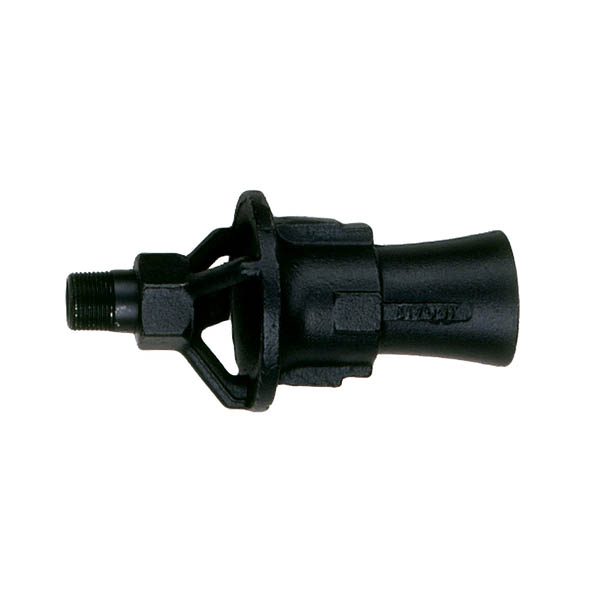
Jacoby-Tarbox® eductors and TLAs provide reliable pumping, mixing, blending and heating without internal moving parts. The product range includes In-Line Eductors and Tank Liquid Agitators, also known as TLAs.
In-Line Eductors operate as jet pumps, ejectors and venturi pumps within process piping. They can move liquids or gases, combine process streams and heat liquids with steam.
Meanwhile, Tank Liquid Agitators create high-velocity flow fields inside tanks and vessels. They support mixing, blending, heating, aeration, chemical distribution and solids suspension.
Both designs use motive-fluid energy instead of a direct electrical drive. Therefore, they can reduce mechanical maintenance and simplify many process systems. Jacoby-Tarbox also offers broad material choices, application engineering and AccuBlend CFD tank analysis.
Westech Industrial supplies Jacoby-Tarbox eductors and TLAs across Canada. Our team can help review process conditions, product sizing and installation requirements. Westech also provides technical service and custom fabrication for integrated skids, piping systems and packaged process solutions.

Quantity
PRODUCT FEATURES
REQUEST FOR INFORMATION
Description
Jacoby-Tarbox Eductors and TLAs Use Motive-Fluid Energy
Jacoby-Tarbox eductors and TLAs operate by accelerating a pressurized motive fluid through an internal nozzle. This action creates a lower-pressure area within the eductor.
The pressure difference draws a secondary liquid or gas into the suction connection. The two streams then combine inside the mixing section. Finally, the eductor discharges the mixed stream into the process line or tank.
This operating principle eliminates internal rotating components. As a result, the eductor requires no direct electrical drive and has fewer mechanical wear points.
However, the system must provide suitable motive pressure and flow. Correct sizing also depends on suction conditions, discharge pressure and the required process result.
In-Line Eductors for Pumping, Mixing and Heating
Jacoby-Tarbox In-Line Eductors perform several process functions within a piping system. They can pump liquids, move gases, blend process streams or heat liquids with steam.
The range serves as the next generation of jet pumps, ejectors and venturi pumps. Because the units contain no moving parts, they can reduce maintenance requirements and operating costs.
Jacoby-Tarbox uses computational fluid dynamics to optimize efficiency and performance. Smooth internal finishes also promote efficient flow through the eductor.
Additionally, the mixing tube section handles normal pipe stress. Integrated wrench flats help prevent installation damage. These features support reliable operation in demanding process environments.
Different eductor models use different motive and suction connection arrangements. Therefore, installers must confirm the correct connection locations before installation.
TLAs Create Effective In-Tank Flow Fields
Tank Liquid Agitators install inside open vessels or closed tanks. A pressurized fluid enters the nozzle and accelerates into a high-velocity stream.
This stream entrains surrounding tank liquid and mixes it with the motive fluid. The combined flow then exits the TLA and circulates through the vessel.
The resulting flow field can reduce stratification and promote more uniform tank conditions. It can also distribute temperature, solids, gases and process chemicals.
TLAs work with liquids that have different specific gravities. They can also support slurries, suspensions and other challenging mixing duties.
Their compact design minimizes interference with other tank equipment. In-tank mounting also removes the need for large mechanical structures above the vessel.
High Flow Amplification for Efficient Mixing
The TLA’s optimized flow path creates a high pickup ratio. This ratio compares the surrounding liquid entrained by the TLA with the supplied motive flow.
At pressure differentials between 10 and 60 psi, the TLA entrains at least four times the motive flow. Above 60 psi, the entrained volume remains nearly constant.
This flow amplification can support effective mixing with a smaller pump. Existing transfer pumps may also serve more than one process function.
However, viscosity, solids loading and tank geometry affect mixing performance. Engineers must also consider the required turnover time and available pump pressure.
AccuBlend CFD Analysis Supports TLA Selection
AccuBlend computational fluid dynamics analysis helps evaluate proposed tank-mixing arrangements. The analysis models fluid movement from initial startup through complete tank turnover.
Engineers can review velocity profiles, directional flow and predicted mixing stages. They can also determine the required number, size and placement of TLAs.
The analysis considers the tank dimensions, fluid properties and available pump conditions. It also accounts for the required turnover time and mixing objective.
Mixing objectives may include blending, solids suspension, layer removal or tank heating. Therefore, AccuBlend CFD analysis can increase confidence before installation.
Broad Material and Connection Options
Jacoby-Tarbox eductors and TLAs support many industrial fluids and operating environments. In-Line Eductors offer both metallic and non-metallic material options.
Available materials include carbon steel, 316 stainless steel, bronze, PVC, CPVC and PVDF. Additional options include Monel®, Alloy 20, Hastelloy® C, Duplex and Stellite®.
Standard TLA materials include bronze, 316 stainless steel and carbon steel. Larger units and other materials may use fabricated construction.
TLA connection options include threaded, welded, grooved, brazed and flanged designs. This flexibility helps match the product to existing piping and tank requirements.
Rugged Design with Minimal Mechanical Maintenance
Jacoby-Tarbox eductors contain no internal moving parts. Therefore, they avoid many maintenance concerns associated with mechanical pumps and mixers.
Routine inspections should still check the nozzle for erosion, debris or process buildup. Technicians should also inspect seals, connections, gauge ports and the eductor body.
Steam applications may require inspections of strainers and steam traps. Facilities should base maintenance intervals on the process fluid and actual operating conditions.
Applications
Jacoby-Tarbox eductors and TLAs support many process duties involving fluid movement, blending and heat transfer. The correct product depends on the motive fluid, process conditions and desired result.
- In-line liquid pumping and transfer
- Liquid and gas pumping
- Process-stream mixing and blending
- Direct steam heating of liquids
- Pump priming and siphon initiation
- Tank mixing and circulation
- Reduction of stratified tank layers
- Solids and slurry suspension
- Chemical and additive distribution
- Aeration and gas dispersion
- Mixing liquids with different specific gravities
- Tank heating
- Scrubbing and gas-liquid contacting
- Wastewater mixing
- Open-vessel and closed-tank agitation
- Viscous-fluid mixing
Documents

Manufacturer Info
Clark-Reliance® Corporation is a global leader in the level indication and control, sightflow indication, filtration and separation industries. The company’s well-known brands constitute the broadest line of level instrumentation for boilers and other equipment found in utilities, refineries, chemical processing and other industries.
Website: https://www.clarkreliance.com/